Learn the idea
A class has a topic, a clear example, a guided build, and checkpoints. Lessons connect so the same ideas return in larger systems.
School of Code / Computer Lab
Classes teach ideas in a planned sequence. The Computer Lab is guided open project time: finish a difficult section, change a rule, repair a bug, or build a more ambitious version.
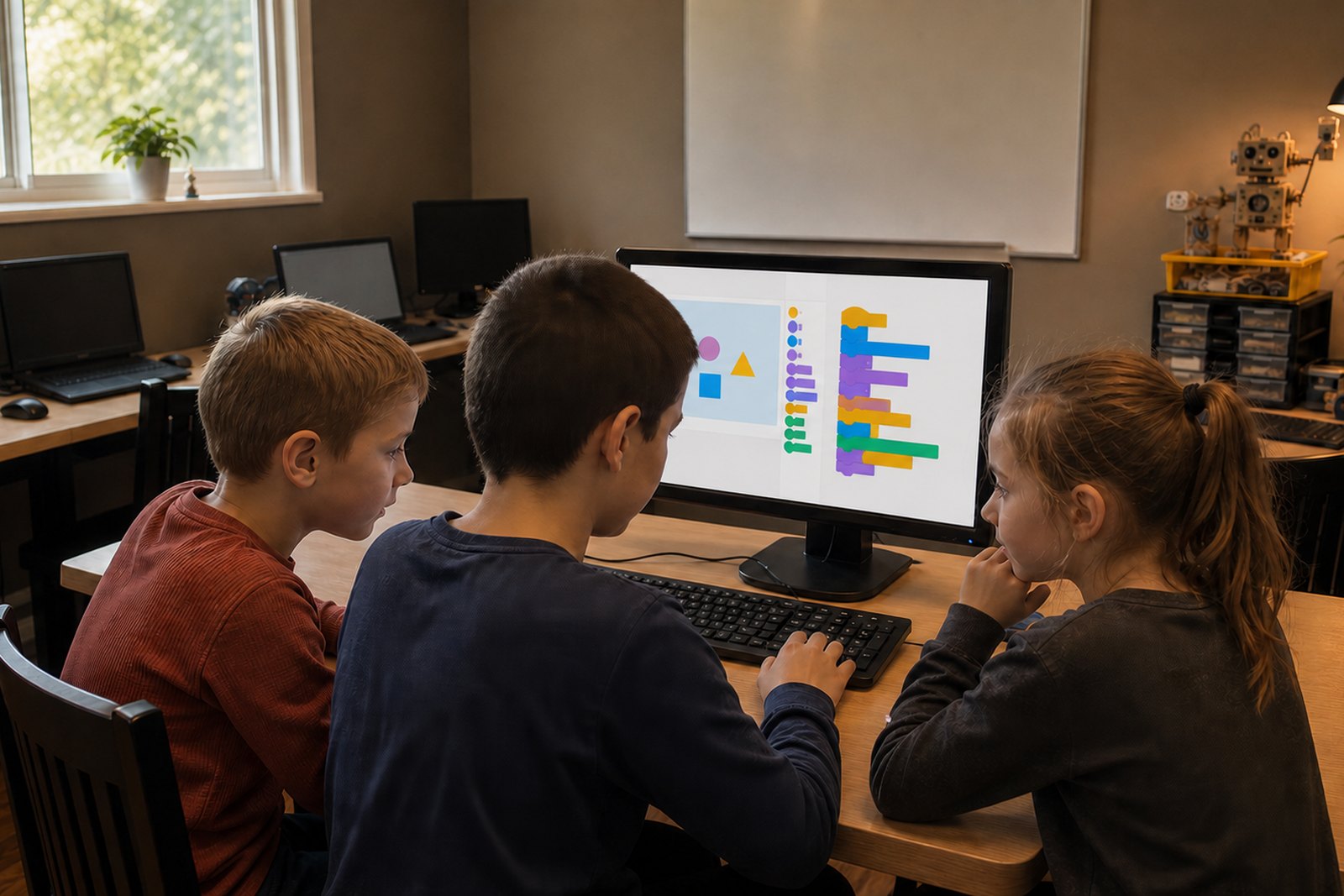
Two kinds of work
A class has a topic, a clear example, a guided build, and checkpoints. Lessons connect so the same ideas return in larger systems.
The student chooses a useful next move and works with an instructor nearby: add a feature, investigate a failure, rebuild a weak section, or prepare a demonstration.
Choosing the work
A half-working project may contain more useful questions than a fresh assignment.
The idea changes form
Known position, x/y movement, boundaries, and visible debugging.
True/false questions, score rules, branches, and reliable reset.
Measurement, thresholds, decisions, action, and rechecking.
Computer Lab projects
Create a virtual pet with needs that change over time and actions that affect more than one value.
See how it worksNavigate a space taxi between coordinate-based pickups and destinations.
See how it worksTrack several drifting chickens, collect them once each, and stay out of the danger zones.
See how it worksTest which materials complete a low-voltage circuit, record the evidence, and investigate readings that do not make sense.
See how it worksDesign a repeating patrol that notices an obstacle, tries a response, and checks whether the response worked.
See how it worksInstructor role
The instructor can narrow the problem, ask for a prediction, point to evidence, suggest a test, or offer a challenge card.
The student makes the decision, changes the project, and explains the result.
Ask how classes and additional project time may fit your child.